• Home
  • Español
  • English
  • About
Menu

Natalia Curonisy

Street Address
City, State, Zip
Phone Number

Natalia Curonisy

  • Home
  • Español
  • English
  • About

Aristotle: Developing a Life of Virtues

December 2, 2022 Natalia Curonisy

Aristotle was an Ancient Greek philosopher and scientist who is still considered one of the greatest thinkers in politics, psychology, and ethics.

According to Aristotle’s ethical theory, the virtuous person exhibits the joint excellence of reason and character. The virtuous person not only knows what the good thing to do is but is also emotionally attached to it.

Aristotle, talking about logic and virtues, also said:

A. All people are equal. One person's life is the same as another's. The happiness of one person is equal to another.
This is Logical Truth.

B: Mine affects me more.
Example:

  • If someone steps on my foot, it hurts. It hurts more when they step on my foot because if they step on yours, it doesn't hurt.

  • If someone takes me some money, it affects me more than if they take it away from others.

  • If someone gives me a promotion, it affects me more than if they give it to someone else.

This is Psychological Truth

C. How is it possible that what happens to me affects me more if we are all equal? What should we do?

In those cases, we must take care more about others. I have to ensure that the people around me are fine and that my team is okay. If there is a fire, let others get out first, etc.
This is an Ethical Truth

This is a quest to understand and develop a life of virtues and moral character. This character assumes that we acquire virtue through practice. By practicing being honest, brave, just, generous, and so on, a person develops an honorable and moral character. According to Aristotle, by honing virtuous habits, people will likely make the right choice when faced with ethical challenges.

Comment

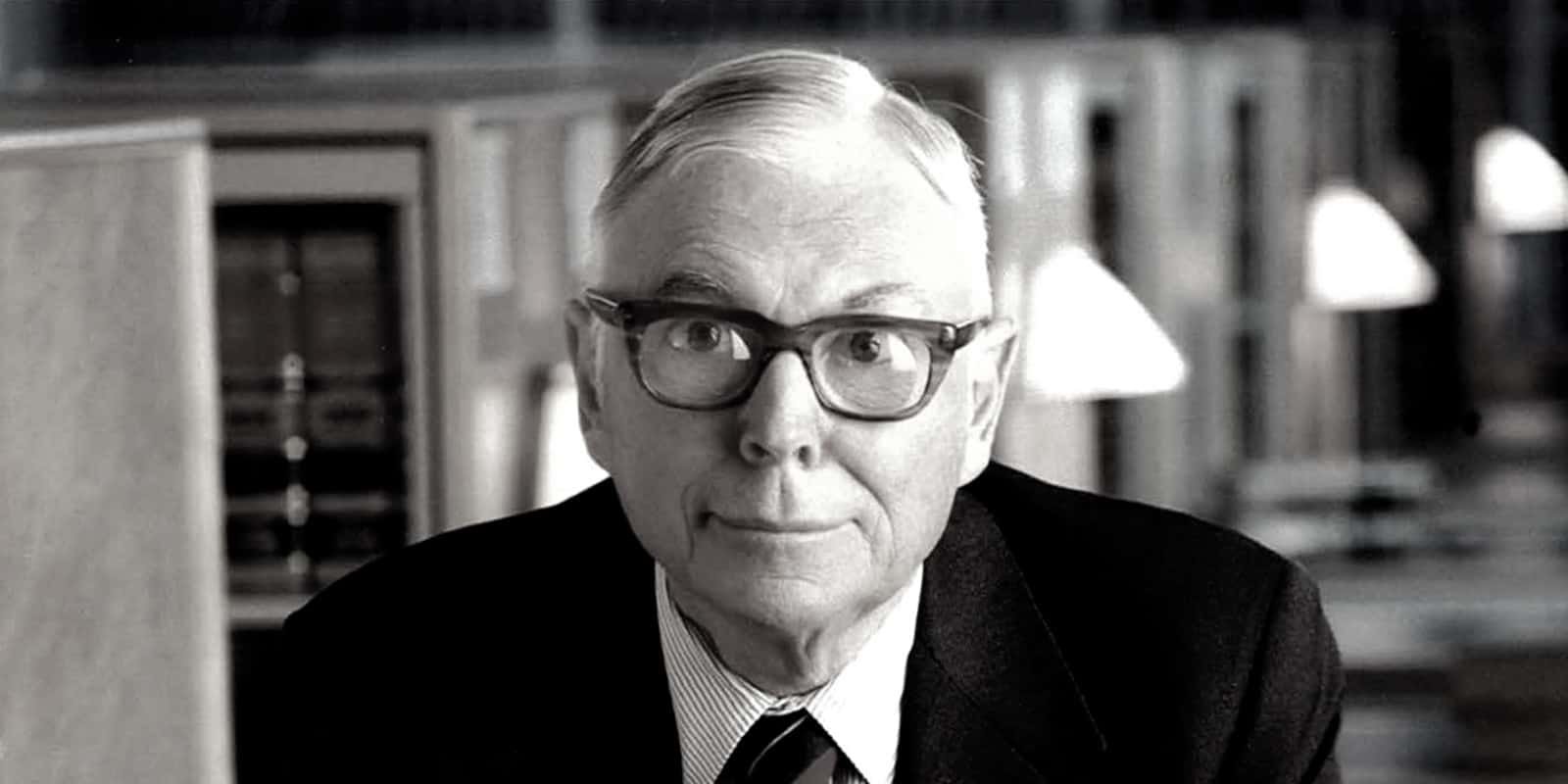
Charlie Munger: The world is not driven by greed; it's driven by envy

December 1, 2022 Natalia Curonisy

Charlie Munger, the business partner of Warren Buffett and Vice Chairman of Berkshire Hathaway, is one of the great minds of the 20th century and is famous for his quote, “All I want to know is where I’m going to die, so I’ll never go there.”

Not many 7-minutes videos change how you view the world. But this Charlie Munger interview probably will.  Munger argues envy drives the world.

It's amazing how achievements there have been in civilization in these last 200 years, and most in the last 100 years. Now the trouble will this is that the basic needs are pretty well filled. (...) With all this enormous increase in living standards, freedom, diminishment of racial inequities, and all the huge progress that has come, people are less happy about the state of affairs than they were when things were way tougher. That has a very simple explanation. The world is not driven by greed; it's driven by envy. The fact that everybody is five times better off than they used to be, they take that for granted. All they think about is somebody else having more now, and it's not fair that he should have it, and they don't. (...)

I can't change the fact that a lot of people are very unhappy and feel very abused after everything improved by about 600% because there's still somebody else who has more. I have conquered envy in my own life. I don't envy anybody. I don't give a damn what somebody else has. But other people are going crazy by it. And other people play envy in order to advance their political careers. We have whole networks now that want to pour gasoline on the flames of envy. (...)

Think of the pretentious expenditures of the rich. Who in the hell needs a Rolex watch so you get mugged for it? Yes, everybody wants to have a pretentious expenditure, and that helps drive demand in our modern capitalist society. My advice to young people is: don't go there. To hell with the pretentious expenditure. I don't think there is much happiness in it. But it does drive the civilization we actually have. And it drives dissatisfaction.

In conclusion, envy can be a powerful driving force in society, leading people to strive for material possessions and success that they don't necessarily need. This can create feelings of dissatisfaction and resentment as people compare themselves to others and may feel that they are falling short.  

With the amount of social media and messages we receive on a daily basis, it is easy to fall into the pattern of comparing ourselves to others. We should focus on personal happiness and contentment rather than trying to keep up with the perceived success of others. It can be challenging to resist the societal pressure to value material possessions and status, but it is important to focus on what truly brings happiness and contentment.

Comment

Blind spots: Challenge your assumptions

November 30, 2022 Natalia Curonisy

Photo by Taras Chernus on Unsplash

Nobel prize-winning behavioral economist Daniel Kahneman studied the two different processing systems the brain uses to make decisions.

System 1 thinking, where bias comes from, is intuitive, automatic, and effortless. System 1 is critical to survival. For example, it’s what makes you swerve to avoid a car accident.

System 2 thinking is deliberate, analytical, and rational. It requires energy. For example, it allows us to navigate a new route when our usual path is blocked.

We are all susceptible to biases, especially when we’re fatigued, stressed, or multitasking. Experts tell us that our unconscious mind makes the majority of our decisions. It creates blind spots—unconscious biases that can narrow your vision and potentially influence your behaviors.

Are you letting blind spots steer your decision-making? It’s time to take control.

Comment

Problem-Solving with the Right Questions

November 29, 2022 Natalia Curonisy

Photo by FORTYTWO on Unsplash

Curiosity makes your mind active instead of passive. The mind is a muscle that becomes stronger through continual exercise. Curiosity makes your mind aware of new ideas. Asking questions with curiosity is a great mental exercise that strengthens your mind. Research also shows that asking questions contributes to developing emotional intelligence and better human (soft) skills and is key to building interpersonal relationships.

Good questions are the key to better insights and the right way to clarify ideas and cut assumptions. If we have the genuine intention to assess our understanding, as well as others, questions can open the door to possibility. We can have real knowledge of what people need and want and also focus on the most important things for your team and your organization.

There are different situations, and some questions are best suited to your needs. This time, I will share questions that can help you explore and discover new solutions or ideas.

  1. Do we have a clear understanding of the root of the problem?

  2. Has anyone else come across this?

  3. What do you think? What are some potential solutions you see?

  4. How would a great company solve this problem?

  5. What is going well for you?

  6. What three things would you change?

  7. If you could change anything about the situation, what would it be?

  8. If you were me, what would you do?

  9. What could we try that may not work?

  10. What is your vision for this project?

  11. What's the quickest route?

  12. What's the no-tech solution?

It is not enough to ask interesting questions. You need to think about them forwards and backward. If you take the time to talk to your team, ask and listen, you can learn a tremendous amount. When you go over problems, go deeper. Iterate, that's when you have more probability of understanding it.

The important thing is not to stop questioning… Never lose a holy curiosity. 
— Albert Einstein

Comment

Rethinking Performance Reviews: What's next?

November 28, 2022 Natalia Curonisy

Photo by Mārtiņš Zemlickis on Unsplash

 The end year is coming, and the performance reviews are just around the corner. We live in a moment when employees have to deal with multiple disruptions, continuous challenges, and uncertainty. With the increasing cases of burnout, disengagement, and employees quitting, we now have to make a stop for the performance reviews.

Many studies found that traditional performance management is outdated and ineffective. A Gallup research shows that traditional approaches to performance management leave many goals of performance management unachieved. Some of the findings are that: only 2 in 10 employees strongly agree that their performance is managed in a way that motivates them to do outstanding work. And only 14% of employees strongly agree that the performance reviews they receive inspire them to improve.

Some main reasons employees feel their performance reviews are inaccurate or unfair are infrequent feedback, lack of clarity, manager bias, adverse reactions to evaluation and feedback, and too much focus on pay incentives. Because annual reviews make employees feel disengaged and less trusting of their company, many businesses decided a few years ago to replace traditional reviews with different performance evaluation processes. Do we have the right process now? I doubt it. But the good news is that more companies are open to reviewing it, adapting it, and making changes to improve it.

Now more than ever, the world demands us to focus on team results rather than individual performance. We need to promote strong collaborations and global connections to resolve issues that it is more clear we can't do it alone. We need to create an environment where people feel safe to take risks, giving them autonomy and empowerment to respond with agility to the market. Most of the things that the economy demands are hard to measure. If we focus on the job that has to be done and declare that we will evaluate employees for those results, we could leave the most important things unconsidered.

The things we believe are important and can make a real difference are not always related to the metrics we define for the performance review. A remarkable job is often related to a personal commitment, values, integrity, daily positive interactions, caring about your customers, and willingness to go further because it is personal, because it is who you are.

Comment

The Real Reason We're All So Busy

November 27, 2022 Natalia Curonisy

Photo by Elisa Ventur on Unsplash

These days, most people feel pressed for time. Dorie Clark, Duke University’s professor, presented in her TEDx important reasons why many people are so busy and what choices they can make in their life to break out of this cycle of overwhelm.

She started by sharing a recent study done by the Management Research Group of 10,000 senior leaders, where they asked them what the key to their organization’s success is. In the results, 97% said “long-term, strategic thinking.” And yet, in a separate study, 96% of leaders surveyed said they don’t have time for strategic thinking.

She invited us to reflect on why 96% of people are not doing the one thing that they say is most critical to their success.

For many people, it is a reality to get trapped in the pattern of the busyness of overwork. Some people have a life that's not really in their full control. Some people are living and dealing with so many "important" things that they don't have the time to reflect on them, so they only react.

This is a great TEDx that raised fundamental questions.

Comment

Honest feedback: the key to personal growth

November 26, 2022 Natalia Curonisy

Photo by Christina @ wocintechchat.com on Unsplash

If we talk about giving feedback, we need to talk about speaking transparently, clearly, and with the right examples.

If we talk about asking for feedback, we need to talk about the vulnerability of asking; humility to listen; a growth mindset to recognize that we all are works in progress; and courage to acknowledge what we hear and work on it.

Honest feedback can help you perform better tomorrow. If you take action, you can improve and shift from where you are to the person you want to become. Avoid nice people who only want to please you or be agreeable; even if what you hear is nice, it will not help you.

 We all have a safety network. Be brave to seek honest feedback from them. Find a person who knows you, wants to help, cares about you, and is willing to be clear because it will really help you grow.

With proactive feedback, you can shape your future, not just react to it. 

Comment

The Opportunity of Choice

November 25, 2022 Natalia Curonisy

Photo by J W on Unsplash

Problems are free, but you can convert them into opportunities.
Opportunity to solve an interesting problem.
Opportunity to connect.
Opportunity to create, learn a new skill, make a commitment, speak up, be generous, do your best work, ask interesting questions, help someone who needs you, care, smile, and show up. You have the opportunity to make something that matters.

The problem with opportunities is that you have to make choices. You have to take the risk and the responsibility. You have to acknowledge that it could not work, that it could be uncomfortable, and that you could be rejected. We live in a world that's still filled with prejudices, limits, and barriers, where too often, people are judged and criticized. It may not be fair, but it's true.

On the other hand, if you care enough and choose to make it personal, you can act with generosity, learning on the journey, and you could make all the difference for the better.

Nothing that’s worthwhile is ever easy. Remember that.
― Nicholas Sparks

Comment

Show Your Work

November 24, 2022 Natalia Curonisy

Photo by Jason Goodman on Unsplash

You can't find your voice if you don't use it.
— Austin Kleon

Showing your work is not about how brilliant or talented you are. Showing your work is not about being in the spotlight or pleasing others. The decision to show your work is to make your work better, so you can act generously and contribute, adding value.

It's tempting to wait until you are ready, but the truth is that we never are. We learn in the process of sharing ideas and in our daily connections. Our work evolves when we show it in public. We learn to give more, to care, and to help others.

There is no perfect way to start. Austin Kleon says that the best way to get started on the path to sharing your work is to think about what you want to learn and make a commitment to learning it in front of others.

You are responsible for making things happen. Today is the best day to start.

Comment

The benefits of delegating responsibility as a leader

November 23, 2022 Natalia Curonisy

Photo by Hannah Busing on Unsplash

We have entered an era of accelerated change, where a culture of trust, giving employees autonomy, open communication, and collaboration are critical for success.

Part of being an effective leader is to be surrounded by competent people, clarify expectations, and let them work. Leaders are responsible for developing their teams. Delegating responsibility is a powerful way to develop and reaffirm your trust in your team.

Effective delegators know that they can’t accomplish everything on their own, so they encourage employees to take on tasks that fit their skills and interests (having taken the time to learn what those skills and interests are). They also ensure their team has everything they need to do their job and provide constructive feedback.

 Here are some recommendations to avoid the most common mistakes:

  • Set clear expectations. Focus on what is the expected outcome and not on how the task should be resolved.

  • Confirm that the person selected understands and is committed to the assignment.

  • Define the employee's authority level.

  • Avoid Perfectionism. Looking for perfection prevents people from taking risks or exploring new things. Mistakes are part of the learning process; ensure that your team takes the time to reflect and learn from them.

  • Encourage collaboration. The most important things usually are done by a team. It's the power of collaboration that make things happen.

  • Follow up and provide coaching and guidance if needed.

Empowering people not only help them grow and reach their potential but also is a critical driver for a company's success. Your team needs to feel valued and know their opinions matter to achieve the best results.

Comment

Sign of Character

November 22, 2022 Natalia Curonisy

Photo by Benjamin Davies on Unsplash

Waste no more time arguing about what a good man should be. Be one.
― Marcus Aurelius, Meditations

Modern personality theory suggests that personality begins with inborn temperament. Over time, you develop your character as you engage in everyday experiences, and that’s how your personality evolves. The character represents your ethical, moral, and social attitudes and beliefs.

Character is a choice and is reflected in how you respond to different circumstances. Character and virtues will be reflected in how you think, feel, and behave. Character will be reflected in how you treat and respect others.

Developing your character is not always easy because, most of the time, it requires you to go for the long, slow, and more difficult path. Developing your character requires intentionality, acknowledging that you are not perfect, nonetheless overcoming your faults, and having the strength to improve yourself.

You will see the result not by the measure of success but in your pursuit of good.

Comment

Growth needs the right environment

November 21, 2022 Natalia Curonisy

"When a flower doesn't bloom, you fix the environment in which it grows, not the flower."
— Alexander Den Heijer

When you are surrounded by people who care —a community who wants to learn from each other,  to do work that you are proud of, to seek to make a difference, and add more value—you know that you are on a powerful path to generate possibility.

Surround yourself with people who inspire you to improve, people you can learn from, and who are willing to help you grow from your mistakes. People who want you to become the best person you can be. Tony Robbins says: "who you spend time with is who you become! Change your life by consciously choosing to surround yourself with people with higher standards!"

Don’t underestimate the courage it takes to change environments and the effort it takes to adjust to a new one. It can be intimidating and challenging. You may even fail. But it’s worth the risk and effort. Life is too short to waste; it’s not a dress rehearsal, and it’s the only one you get.
— Don McMinn

You’re the average of the people who surround you.

Comment

Human skills

November 20, 2022 Natalia Curonisy

Photo by Quino Al on Unsplash

Human skills matter. Sometimes called "soft skills," these are often the hardest to master.

Courage, justice, integrity, empathy, self-control, adaptability, resilience, creativity, collaboration, communication, patience, kindness, credibility, and respect. All these are human skills, and you can learn them. If you only focus on what is easy to measure, it is possible that you are not expending the right energy and effort on critical human skills.

It may be time to focus on growing people in a way that can’t be measured by a number.

It may be time to focus on the skills that make humans indispensable.

Comment

Be kind

November 19, 2022 Natalia Curonisy

Photo by Bonnie Kittle on Unsplash

"Being rude is easy. It doesn't take any effort and is a sign of weakness and insecurity. Kindness shows great self-discipline and strong self-esteem."
— Unknown

Rudeness is everywhere. People are rude and disrespectful when they act impolite, inconsiderate, or mean toward someone else. Being rude is easy. You have a hard day; a stranger cut you off in traffic, a coworker is mean to you, your computer breaks down...

Treating people with kindness is not always easy, especially when dealing with rude people. When you are kind, you enjoy your days more, and you encourage others to spread respect. When you choose to be kind, you grow in humanity, self-esteem, and strength.

More important, you might consider treating people with kindness because you can and because it reflects the person you choose to be.

Comment

The benefits of the doubt

November 18, 2022 Natalia Curonisy

Have you observed yourself interacting with people that you just met? Who gets the benefit of the doubt? We all have biases. Unconscious biases are everywhere.  The challenge, then, is to be aware of our biases and decide how we want to act with the people around us. Are you willing to give the benefit of the doubt to someone who doesn't look or talk like you?

If you don’t choose behaviors beyond your natural instincts for what you like and don’t like, you will miss incredible possibilities in your life.

The benefit of the doubt radiates possibility.

Comment

The Productivity Paradox

November 17, 2022 Natalia Curonisy

Photo by Kenny Eliason on Unsplash

Many people are working more than ever (nearly 50% of employees and 53% of managers report that they’re burned out at work) at the same time; leaders have concerns if hybrid work is being productive, so most employers are offering return-to-office incentives.

This disconnect is reflected in a recent survey by Microsoft. This research shows that most employees (87%) report being productive at work, but only 12% of leaders have confidence that their team is productive.

As leaders, we are responsible for bridging the productivity gap between leaders and employees. Some critical steps are aligning work with the company strategy, clarifying expectations, and defining the most important things to be done.

However, the most probable cause of this paradox is a low-trust culture. Trust is confidence. It is the belief that someone or something is reliable, good, honest, and effective. When you trust people, you have confidence in them—in their integrity and their abilities.

Building trust is one of the most critical challenges facing our society today. As Stephen Covey mentions in his book The Speed of Trust: “Trust always affects two outcomes—speed and cost. When trust goes down, speed will also go down, and costs will go up.”

If we want to bridge the gap between leaders and employees regarding productivity, we need to reinforce trust. And the behavior that best creates credibility and inspires trust is acting in the best interest of others. Talk with your team. Clarify expectations and understand how they perform best.

The way companies approach the next phase of work — embracing the positives and learning from these challenging years — will impact who stays, who goes, and who ultimately seeks to join your company. Your choices as a leader will make all the difference.

Comment

How to find the best candidates

November 16, 2022 Natalia Curonisy

Photo by Eric Prouzet on Unsplash

Having the right members on your team will make all the difference in your organization. We need to remember that businesses don't compete. People do. People create value. As leaders, we are responsible for investing the time and energy to find these people and provide them with the right environment to succeed.

One of the most important things I have learned in talent search is to hire based on values, character, and not just skills.

In an interview process, you can learn what the person is doing by asking the right questions. You can learn their ethical standards and critical judgment. Another not minor topic is understanding how the person thinks about continuous self-improvement, habits, and attitude to confront challenges.

Caring about their answers is part of generating the right conditions where the person can be seen and heard. To get the most value from the process, it is important to be trusted, authentic, casual, and, if possible, avoid the office. Invite the person to take a coffee. You will have the opportunity to see how the person interacts with others.

Ask questions that you really want to know the answer to. As Clayton Christensen says, "Without a good question, a good answer has no place to go." Invite the candidates to tell you stories, so they can show you the behaviors and values of how the person responds to different situations. When you ask for a story, you have a higher probability to get the closest version of the truth. Here are some curated questions that I found insightful that could help you identify the right talent for your team:

  1. Tell me about a specific time when you had to handle a tough problem that challenged fairness or ethical issues. What happened, and how did you respond? (Warren Buffett)

  2. How did you spend your morning today? Use this question to learn about their daily habits and also help you get people into conversational mode. (Tyler Cowen and Daniel Gross)

  3. What is one of the best or most worthwhile investments you’ve ever made? (It could be an investment of money, time, energy, etc.) (Tim Ferris)

  4. When was the last time you "broke the rules"? What was the situation, and what did you do? (Warren Buffett)

  5. What's something weird or unusual you did early in life? (Tyler Cowen and Daniel Gross)

  6. Tell me about one of the most difficult problems you’ve worked on and how you solved it. (Elon Musk)

  7. When working with people, how would you describe your preferred relationship with them? Use this question to assess honesty and the capacity for open communication. (Warren Buffett)

  8. What values do you appreciate the most in a team environment? Use this question to look for other trustworthy traits, like fairness, transparency, and inclusiveness —all hallmarks of integrity. (Warren Buffett)

  9. What important truth do very few people agree with you on? This question sounds easy because it’s straightforward. Actually, it’s very hard to answer. It’s intellectually challenging because the knowledge that everyone is taught in school is, by definition, agreed upon. And it’s psychologically difficult because anyone trying to answer must say something she knows to be unpopular. Brilliant thinking is rare, but courage is in even shorter supply than genius. (Peter Thiel)

  10. In the last five years, what new belief, behavior, or habit has most improved your life? (Tim Ferris)

  11. Life's most persistent and urgent question is, 'What are you doing for others?' (Martin Luther King, Jr.) 

Take the time to rethink the people search process. Be clear about your values and those things that you will not settle. Hire people better than you. People who can look beyond, think about continual self-improvement, and at the same time seek to develop others. Hire someone that you would follow.

Comment

Dark side of gratitude

November 15, 2022 Natalia Curonisy

Photo by Sinitta Leunen on Unsplash

Gratitude is the quality of being thankful. It's about focusing on what's good in our lives and being thankful for the things we have.

In positive psychology research, gratitude is strongly and consistently associated with greater happiness. Harvard Health Publishing explains that gratitude helps people feel more positive emotions, relish good experiences, improve their health, deal with adversity, and build strong relationships.

However, there is a dark side of gratitude. Several research shows that there are situations when being grateful could do more harm than good.

According to the Personality and Social Psychology Bulletin, expressing one’s thanks in the context of an unequal power relationship can help solidify the power hierarchy and undermine protest by members of the low-power group. 

Another dark side of gratitude is when we feel trapped in seeing the good in everything, and if we don't acknowledge our own emotions, we could be ensnared in toxic gratitude. If we force ourselves to feel thankful and hide our real emotions, this can generate stress and frustration that is detrimental to our mental health.

Acknowledging the contrast between the bright and the dark side of gratitude in our life doesn't invalidate all the positive things; on the contrary, it enhances it. As humans, there are moments when we can be so grateful that we forget that we have the right and the responsibility to set boundaries, accept the moment we went through, and work toward something better.

Comment

The power of introverts

November 14, 2022 Natalia Curonisy

Photo by Matias North on Unsplash

We live in a society that overvalues extrovert people. Most people admire the type of person who's confident and comfortable in the spotlight. In the workplace, extroverts are usually perceived as better performers, are highly recognized, paid more, promoted faster, and are the stereotype of the expected behavior. However, as Adam Grant says, what matters is the competence people possess, not the conviction they express.

What is an introvert?

An introvert is a person predominantly concerned with their thoughts and feelings rather than with external things. Introverts prefer quiet, minimally stimulating environments, while extroverts need higher levels of stimulation to feel their best. Usually, people are not wholly extroverted or introverted but a mixture of both. However, everyone is more inclined towards a particular personality type.

Susan Cain explains that: It’s important to understand that introversion differs from shyness. Shyness is the fear of negative judgment, while introversion is simply the preference for less stimulation. Shyness is inherently uncomfortable; introversion is not. The traits do overlap, though psychologists debate to what degree.

Advantages of being an Introvert

Many people incorrectly think it is better to be an extrovert rather than an introvert. However, there are many benefits to introversion. Here are a few advantages of being an introvert:

  • They're good listeners,

  • They're deep thinkers,

  • They're more creative,

  • They think before they speak,

  • They're observant,

  • They’re thoughtful networkers,

  • They’re compassionate leaders,

  • They don't seek external validation,

  • They're independent,

  • They may speak less, but when they do – they make their point well,

  • They can really focus,

  • They're completely happy being alone.

Famous Introverts

  • Abraham Lincoln,

  • Eleanor Roosevelt,

  • Albert Einstein,

  • Rosa Parks,

  • Mahatma Gandhi,

  • Barack Obama,

  • Emma Watson,

  • Steven Spielberg,

  • J. K Rowling,

  • Bill Gates,

  • Warren Buffett,

  • Mark Zuckerberg,

  • Marissa Mayer, and

  • Elon Musk.

Introverts as Leaders

There is a misconception that introverts can't be good leaders. According to Adam Grant's research, introverted leaders sometimes deliver better outcomes than extroverts do. Introverts are more likely to let talented employees run with their ideas rather than trying to put their stamp on things. And they tend to be motivated not by ego or a desire for the spotlight but by dedication to their larger goal.

How to bring out the best in each other?

As an introvert who has spent many years working with extroverts, my experience shows that we can have the best of each other when we create and promote an inclusive environment. As leaders, we are responsible for creating an environment that respects and empowers our differences to unlock the potential of our team. Here are some recommendations:

  • Have an awareness of your team's personalities and in which conditions they perform their best.

  • Seek to understand the experiences and diverse perspectives of others. Practice active listening to learn more about your team.

  • Create the right conditions for everyone to speak up. Promote an environment where everyone can participate and share their ideas. Invite people to listen, participate, and provide equitable treatment. Ensure that all voices are heard and respected.

  • When you need your team's input, send the request in advance. Allow time for preparation and thought.

  • Provide opportunities for private working (for introverts.)

  • Make no assumptions about the best way to work with your team.

When we value our differences and respect each other, we all grow.

Comment

Don't give up

November 13, 2022 Natalia Curonisy

Don't give up

“There will come a time when you believe everything is finished. That will be the beginning. ”
— Louis L'Amour

Comment
← Newer Posts Older Posts →

Subscribe

If you like the blog content, you will love the subscription

¡Muchas gracias!