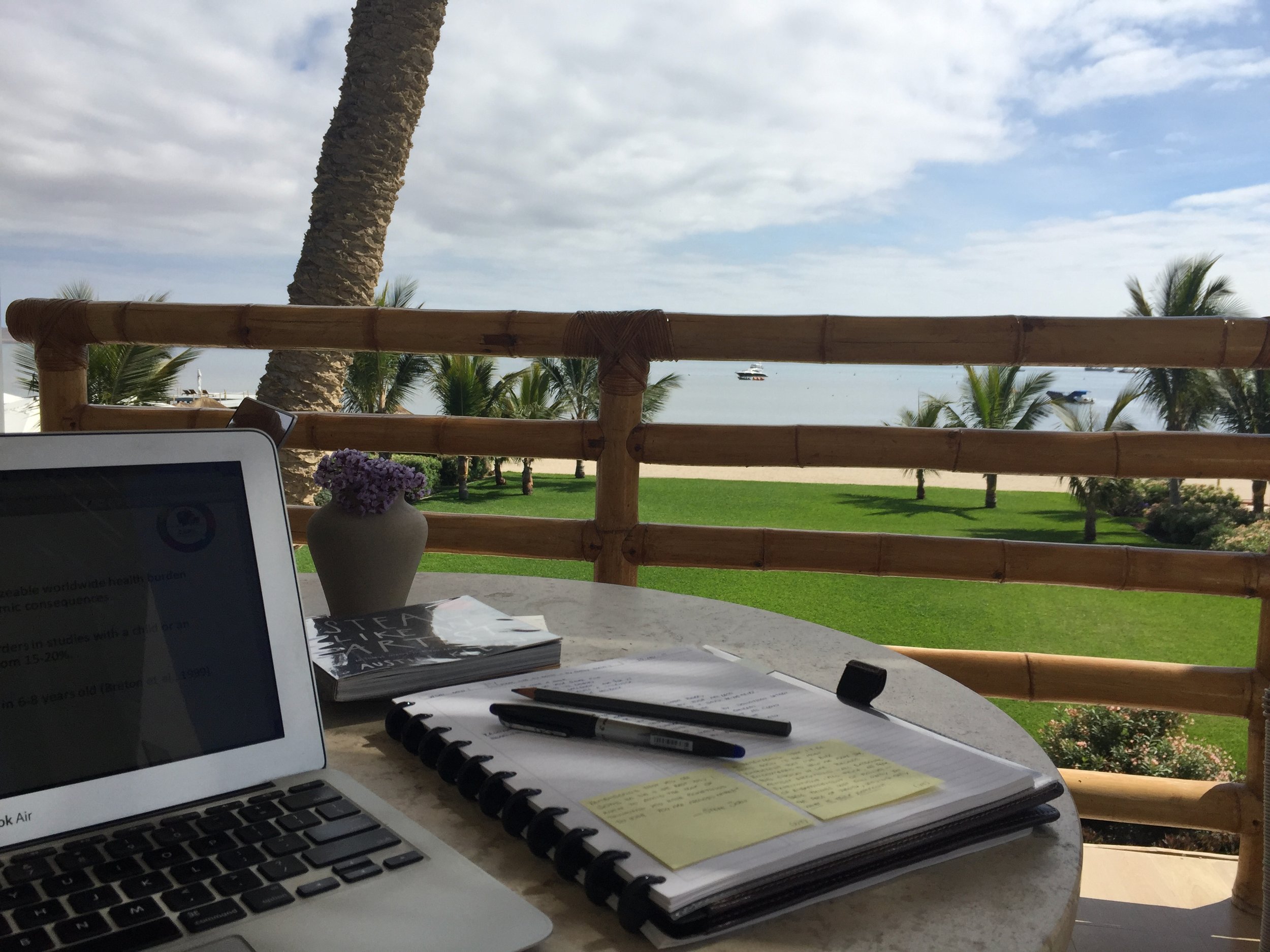
The year 2020 and the COVID pandemic brought a series of unprecedented changes, challenging people and organizations to drastically change how they worked. For some of them, it implied working in ways they previously thought impossible.
With the challenges and difficulties, opportunities arrived. The humanization of work and empathy became more relevant than ever. The awareness of helping and caring for others grew. We heard frequently expressions like "you are not working from home; you are at your home, during a crisis, trying to work." For everyone, it represented a unique experience. It was precisely those moments that brought subjects like flexibility, psychological safety, and wellbeing to the table. These challenges also opened a door to opportunities. In some cases, levels of productivity increased dramatically. Being able to work remotely opened a global talent marketplace that, until then, very few companies were taking advantage of.
3M, where I work, relaunched a global campaign called FlexAbility 2.0, encouraging people to organize their working schedules according to their needs. In Consumer Business, we embraced practices like "zero-meetings Fridays." We also tried to minimize the number and duration of meetings. Instead of having 1-hour long meetings, we reduced the time to 45 minutes or 25 minutes. Most important, we encouraged all the leaders to create a safe space for people to talk to each other about these complicated, emotional topics; to find the courage to ask for help, to be real, to understand what they were going through.
It's true we still are a company with lots of meetings, but with a great flexibility that is based in a culture of trust and autonomy so that you can discern how do you want to organize your work. Reinforcing trust is key when you are not willing to replicate everything you did in the office while working remotely; when hearing leaders say that "it's OK not to be OK", and that it's also OK to say that you need to disconnect, or take a day off, or a week, or whatever you need. The premise is that our work relies on a culture of trust and responsibility, and not on one of working hours or connection time.
The Power of Global Workforce
Remote work has uncovered the advantages of a flexible job, with increased opportunity for family time, and for a lot of people, it also represented an increase in productivity.
According to a study from Microsoft based on more than 30,000 people in 31 countries, employees are reevaluating priorities, home bases, and their entire lives. The research shows that 41 percent of the global workforce is likely to consider leaving their current employer within the next year, with 46 percent planning to make a major pivot or career transition.
At the beginning of the year, Shane Parrish interviewed Matt Mullenweg on The Knowledge Project podcast. Matt is co-founder of WordPress, the open platform that runs more than 30% of websites in the world, and CEO of Automattic.
Talking about the difference between remote and distributed work, Matt explains that the word remote implies isolation. "Who wants to be remote from their colleagues? Remote implies that there’s something central and you’re far away from it. There’s a remote mountain or you’re in a remote town. You’re isolated. (...) When you operate as a distributed team, the system itself becomes resilient because the nodes are relatively independent but each able to fully contribute. For us, it’s so important that every single person in the company has an equal ability to contribute."
"In non-pandemic times, a lot of automatitions love dropping their kids off from school and picking them up. That’s easy to do because you don’t have to leave an office, walk into a parking lot, all your colleagues see you going somewhere and wonder if you’re goofing off. It’s just part of your day, and I like that it creates a lot more objectivity and focus around what the actual work is. Because I believe in offices we’re so distracted, just as human social animals, by all the things around the work. How someone dresses, whether they’re present or not, what times they’re present, do they appear to be working really hard? And these things are... They’re the map, not the territory, right? "
The Difference between Distributed and Remote Work
Automattic, with more than 1,300 employees distributed around the world, started from its inception as a distributed company. Below are some highlights from the interview, where Matt Mullenweg shares the six levels of distributed autonomy that he learn from this journey:
"Level zero: is a job which absolutely cannot be done distributed. Eg. construction.
"Level one is when if you weren’t in the office or with your other colleagues for a little bit of time you could get by, but the environment is not really suited for it. Maybe you could hop on a phone call but maybe you wouldn’t have access to a VPN or internal company resources.
"Level two is where most companies went to in the pandemic. This is where you basically try to take everything you did in the office and recreate it online. You say, “Oh, we used to be in six hours of meetings a day. Now let’s be in six hours of Zooms a day, and let’s have these ways of reporting.” Maybe you have access to more of the tools online. If you’re in level two, you might feel totally exhausted at the end of every day in a way you never did in the office. Lots of level two organizations have too many meetings. They worry about installing monitoring software on their employees’ computers, or they don’t have a good way for people to have a home office set up, or things like that.
"Level three is where you start to embrace the benefits of being online. We like to have a Google Doc. When we have meetings, we have Google Doc that’s open on everyone’s computer, and we’re taking notes in real-time, and everyone is looking at that next to the Zoom. This allows a real-time record of whatever’s being recorded in the meeting. Also, that becomes a sense-making apparatus, so if someone is taking the notes, which, by the way, we can share, and they see something written down which wasn’t what they thought was said, all of a sudden you’re reconciling that difference. That’s super, super powerful.
"Level three, you start to have fewer meetings too, which I like. Level three is still synchronous though. You’re still expecting people to be online working together at that same time to get work done.
"Level four is where you go from synchronous to asynchronous, and this one’s kind of magical. By the way, it’s also really, really hard. It’s much easier to work together if you’re there at the same time and you can kind of ping pong back and forth. But if you’re able to design an organization that people popping in and out at whatever timezone or whatever times are able to fully contribute and move forward the goals in a meaningful way, then you unlock access to the world’s talent. You unlock ultimately flexibility in everyone’s day.
"You give people a ton of autonomy, and I believe asynchronous interactions can be far richer than synchronous ones. You unlock the power of the introverts in your company. People for whom in a real- time meeting they might hang back a little bit or be shy, or they might need to think about things to really contribute their best thoughts."
"For example, inside Automattic, we have this internal blogging system called P2. If we’re trying to make a decision for this widget inside of the product we don’t call a bunch of meetings about it. We create a thread, and so this internal blogging thread someone will say, “Hey, we need to decide on this widget. Let’s discuss it for 36 hours and then we’re going to make a decision. And then everyone essentially has almost an internal comment thread that’s kind of like a mix between... Well, it’s just like a blogging comment thread or forum where they can discuss and they can embed videos, and gifs, and mock-ups, and discussions, and link to research, and everyone’s participating in their own time. (...) So, instead of just on the cuff responses and reactions to things, they’re able to really think about it. Take a walk around the block. Take a shower. Play with your dog. Think about the problem and really ruminate on it and bring your best answer too. Then everyone’s doing that back and forth, and then at the end of the time period, we can be like, 'All right, let’s synthesize the best wisdom, and knowledge, and information from this and make a decision.'
"And so, it took a little bit longer, maybe from start to finish, but I feel like the decision could be 10 or 100 times better. And when the quality of your decisions determines your outcome, this sort of process can be amazing.
"Level five is nirvana. It’s somewhat unattainable but what you always want to aspire to. Level five is where I believe that the organization in a distributed fashion is outperforming at every single level. Productivity, quality, employee happiness, everything, any in-person organization. Because you’ve embraced all the power, all the special features of this asynchronous approach and everything’s better.
"A secret sauce, a magic ingredient of our distributed approach is in normal times we get people together three or four times a year. As humans, I still think there’s something that is impossible to recreate online, which is that breaking bread, the bottle of wine you and I share. Whatever the equivalent of that is. It just builds trust in a way that you can get pretty close online. I think you can get 85-90% of the way, but you can’t get to 100. "
It's a great interview, I strongly encourage you to listen to the complete version.
Key Learnings from a Distributed Company
Some points that help Automattic and Wordpress run a fully distributed operation:
Monthly town halls, where anyone can ask any question, and someone in the company just answers them in real-time.
Record meetings. Post meeting recordings, so anyone who wants can watch later at faster speed that hour-long meeting.
Real-time collaborative notes. Take real-time notes of meetings using a tool like Google Doc, in a document that’s open on everyone’s computer. If someone sees something written down which wasn’t what they thought was said, all of a sudden you’re reconciling that difference.
Meeting notes. If every meeting is transparent and has really good notes or a recording, people don’t feel the need to be there.
Clear expectations, which create accountability. You can evaluate if you did the things that were expected of the role, or this job, or that other people were depending on. The most common issue is that people work really hard on the wrong things.
Asynchronous work. Experiment to go from synchronous to asynchronous work.
Face-to-face contact. Get people together three or four times a year. As humans, face-to-face contact builds trust and empowers distributed work.
Overwork. The problem they have in distributed work is not underwork but overwork. To address this problem, they have developed a lot of internal systems. They used to not track any vacation or what they call AFK, away from keyboard time, because they have a completely open policy there. The problem was people weren't taking vacations, so they started tracking to encourage people to take it.
Almost Zero email. Everything happens on the blogs, except for truly private things.
Are you Ready?
The way companies approach the next phase of work — embracing the positives and learning from the challenges of last year — will impact who stays, who goes, and who ultimately seeks to join your company. The choices leaders make will impact an organization’s ability to compete for the best talent, drive creativity and innovation, and create an inclusive work environment for years to come.